Ah Christmas! The tree, the ornaments, the fairy lights and let’s not forget the food! We love it, right? Christmas is a wonderful time, it truly is. But if you have pets, like me, it can come with a few extra worries too. Our curious, furry friends will stick their noses into anything and everything! But worry not. Here’s how to take care of your pets this Christmas.
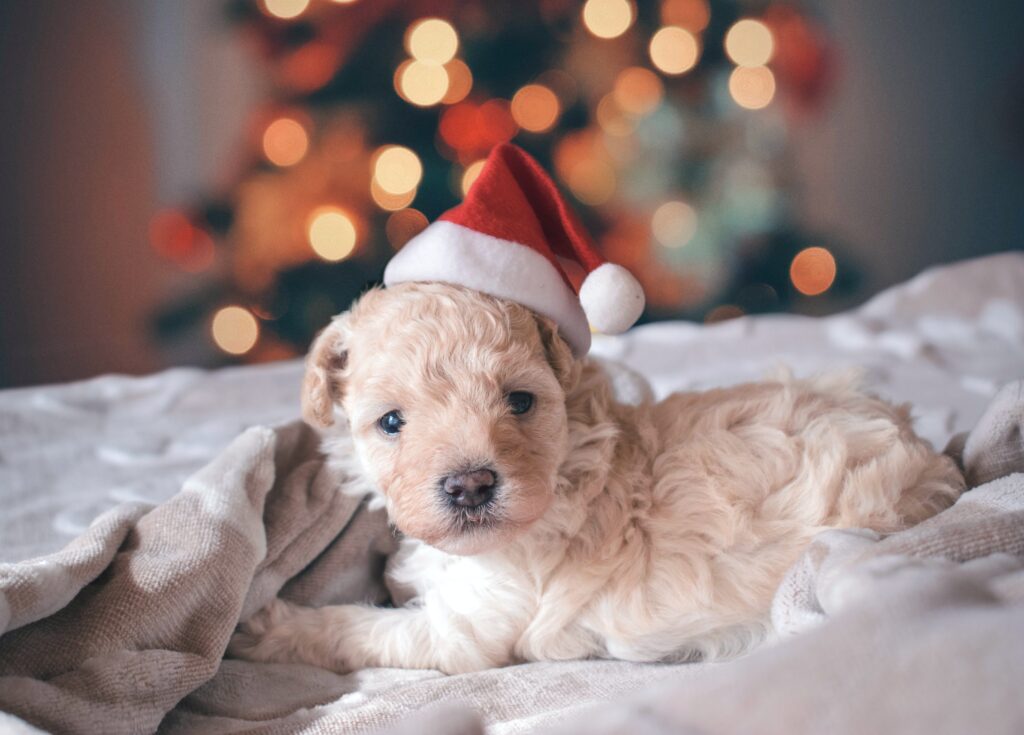
While there’s lots that is humans love about Christmas, those very things that bring us joy can make your pets poorly, anxious or stressed. With these handy tips though you’ll know what to look out for to make sure the furry members of your family have a merry Christmas too.
Christmas food
Hands up who else loves Christmas food? It’s one of my favourite things about the season. From the delicious sweet treats, to the roast dinner, the left overs and the turkey sandwiches. It might be tempting to think that because we enjoy Christmas food so much that our pets deserve a treat too. Some foods are extremely toxic for pets though so when it comes to sharing Christmas dinner here’s what pets should and shouldn’t have:
Food to avoid for dogs
Anything fruity for dogs is a big no-no. Grapes and raisins are toxic for dogs so keep mince pies, Christmas cake and the like well hidden in air tight containers and in a cupboard.
Chocolate is also dangerous for dogs. The chemical theobromine found in chocolate is what causes illness in dogs and the darker the chocolate the more theobromine it contains. Make sure those tubs of chocolates always have the lid on and are kept out of the way.
Anything from the onion family so garlic, leeks and shallots can damage the red blood cells causing anaemia.
It’s best to keep all food and leftovers out of the way of dogs because they will be curious about the delicious smells so the safest things to do is keep temptation out of their way.
Food to avoid for cats
The list of Christmas foods cats should avoid is pretty similar to the one for dogs. The means anything containing chocolate, grapes or raisins, anything from the onion family alongside anything overly fatty or salty should be avoided.
However many cats are also lactose intolerant meaning they can’t process dairy products. Dairy products can lead to vomiting and diarrhoea.
What to feed your pets at Christmas
Where possible you should stick to your pets usual diet to avoid any stomach upsets. However if you do want to give them a little Christmas dinner treat then the following foods are suitable for both cats and dogs as long as it’s in moderation:
- Skin and bone free meat. Try to stick to white meat too as the dark meat can be too rich for pets.
- Plain mashed or boiled potatoes with no added salt or butter
- Carrots, peas, parsnips and sprouts
Save for later!
Maintaining their usual routine
Maintaining your pets usual routine will help them feel more settled in the busy festive period. Try and stick to the same meal times and take your dogs out for the same amount of exercise as you usually would.
If there’s likely to be a disruption to their usual routine through an increased number of visitors to your home or through you having to travel with your pet then there are things you can do to make them more comfortable. When travelling make sure they have their bedding with them as the familiar scent will be comforting to them. Also make sure they’re used to travelling before embarking on a Christmas journey. When it comes to having more visitors than usual make sure your pet has a safe space they can retreat to if they need it. And make sure your visitors don’t disturb them if they are seeking out some alone time. This is especially important if you have children visiting who might be more inclined to follow pets around.
The dangers of Christmas decorations
We’ve all seen funny photos or videos of pets knocking over Christmas trees but it’s best to be aware that decorations can be a hazard for pets. Those carefully placed decorations can look like tempting toys for pets. Especially for cats who like to swat and bat things. Not only do you not want your decorations breaking but you don’t want any foil, glass or plastic to be ingested by your pets or to get stuck in their paws.
Lights can also be a similar temptation so make sure all wires are tucked away from pets who may be tempted to pull on them or even chew the wires.
When it comes to the tree itself real Christmas trees pose the most threat to pets rather than artificial ones. The oils in real trees can be mildly toxic. However it’s the falling pine needles you need to watch out for. They’re pretty sharp and can get stuck in the pads of your pets feet. Worse still if eaten they can get stuck in the throats of cats and dogs and the sharp tips can cause internal damage to organs. Regularly sweeping and vacuuming should help with pine needles. Also discourage pets from playing in or around the tree.
Other Christmas hazards for pets
While food and decorations and the big dangers for pets at Christmas and a lack of routine can cause stress and anxiety, there are a few other hazards to be aware of to ensure you’re taking good care of your pets over Christmas:
- Plants – poinsettia, holly, miseltoe and ivy and all mildly toxic for pets. Also if you’re bringing bouquets or flower arrangements into the house it’s best to place them somewhere where your pets don’t go as flowers can be very tempting for pets to chew on and a lot of flowers aren’t good for pets.
- Presents – if you’re putting presents under the tree then pets are going to get curious. They’ll want to investigate and maybe even unwrap the gifts. Not only do you not want them unwrapping gifts before Christmas Day but if they do this unsupervised then the gift may be something that can cause them harm.
- Wrapping paper – although not overly dangerous pets may be tempted to shred wrapping paper if it’s left in a pile and the print can stain their mouths which can look quite alarming. Also gifts come with a lot of things pets can easily ingest such as silica gel and tie wraps so it’s best to clear things like that away as soon as possible.
Do you have any tips for taking care of pets over the festive season? Share them in the comments!
Pin this:


I don’t have any pets at home but have many friends and family who do so I will be sending this to them — super informative and helpful!
Thank you so much!
Some great advice for taking care of your pets at Christmas Lauren, it’s important to remember that dogs and cats can’t handle the normal food that we eat, people forget how harmful it can be for them x
Lucy | http://www.lucymary.co.uk
Thanks! Yes definitely, I think a lot of people do it because they think they’re being kind but it can be super harmful.
Thank you so much for sharing this! The holidays can be a very difficult time for our pets. So many people don’t realize what the dangers are, which makes posts like this so important.
Thank you, I’m glad you enjoyed it.
One of my cats loves eating sweetcorn and the other loves cheese (only a teeny tiny bit!) Weirdly, my cats haven’t been that interested in baubles this year 🤷
Our cats are also fans of cheese and sweetcorn!
We are lucky our cat doesn’t like to eat anything we like apart from Pandoro – of course, in little nibbles every now and then! – but this list is very helpful indeed x
Thanks. One of our cats is a fussy eater but the other one would eat anything and everything!
With having 2-70 plus pound dogs at home, their safety is always the utmost importance. Glad to see you mention food. Too many take for granted that they have iron tummies and can eat anything. Great reminder!
Thanks! Yes I think people forget there’s a lot of foods that aren’t great for pets.
Another great option to include if people are looking to include a little seasonal flair in their pet’s diet over the holiday season is pumpkin! Pumpkin puree is not only safe for our pets, it carries A LOT of great benefits. Just make sure that it’s pure pumpkin puree and not already spiced pumpkin pie filling as the spices can upset their stomachs.
That’s great and something I didn’t know! Thanks for sharing.